
What is KaaS
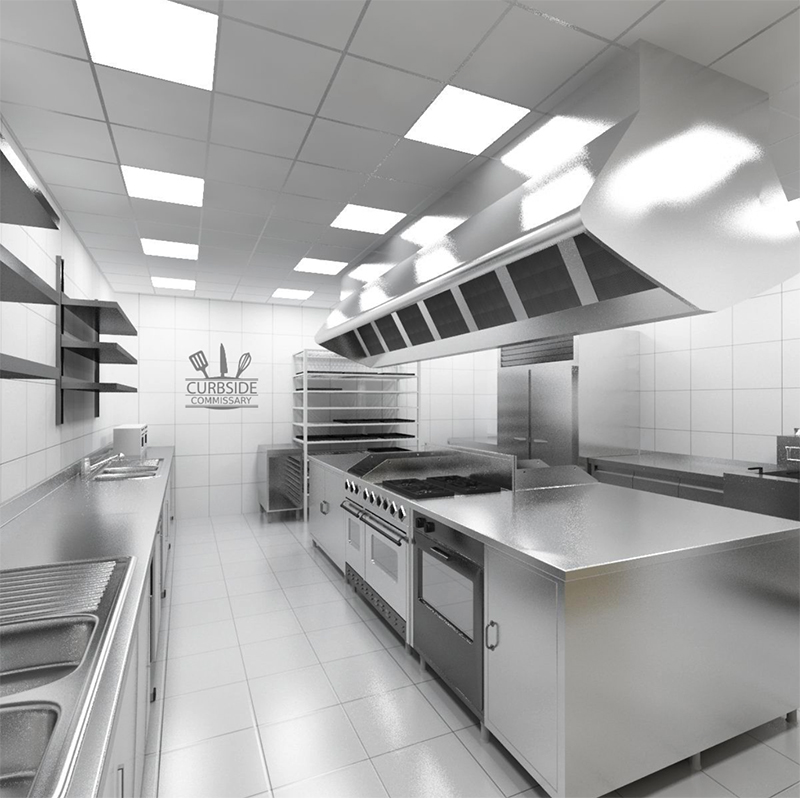
KaaS Kitchens
KaaS the Future of Commercial Kitchens
The Future of Scalable Food Production and Brand Growth in Alabama:
The food and beverage industry has entered a new era—defined by adaptive infrastructure, technology integration, and cross-sector collaboration. Across the Southeast, the next generation of food entrepreneurs is looking for production-ready facilities that reduce risk, simplify compliance, and accelerate time-to-market. Curbside Commissary at Tributary meets that need.
Located within the Tributary Innovation Center—a 420,000-square-foot adaptive reuse campus in Birmingham, Alabama—Curbside transforms the former AT&T Alabama operations complex into a vertically integrated culinary manufacturing ecosystem. It provides a flexible, compliant, and scalable environment for three principal user types:
The food and beverage industry has entered a new era—defined by adaptive infrastructure, technology integration, and cross-sector collaboration. Across the Southeast, the next generation of food entrepreneurs is looking for production-ready facilities that reduce risk, simplify compliance, and accelerate time-to-market. Curbside Commissary at Tributary meets that need.
Located within the Tributary Innovation Center—a 420,000-square-foot adaptive reuse campus in Birmingham, Alabama—Curbside transforms the former AT&T Alabama operations complex into a vertically integrated culinary manufacturing ecosystem. It provides a flexible, compliant, and scalable environment for three principal user types:
- Caterers and Prepared-Meal Producers – who need fully equipped kitchens with reliable cold storage, dish, and dock access.
- Food Trucks and Mobile Vendors – who require licensed commissary facilities, cleaning stations, and dry/cold storage.
- Consumer Packaged Goods (CPG) Manufacturers – small and mid-sized producers of sauces, baked goods, beverages, frozen foods, and similar products, scaling toward regional distribution.
Curbside is more than a shared kitchen. It is a complete production infrastructure designed for both ready-to-eat and shelf-stable food businesses. The facility combines:
Why Curbside at Tributary Is Different:
Unlike the temporary “ghost kitchen” concepts that emerged during COVID-19, Curbside’s model is built for permanence, scale, and manufacturing readiness. It is focused not on delivery-only restaurants, but on long-term business growth and regional food production. Key Differentiators:
1. Infrastructure for Growth - Tributary’s former cafeteria and event support areas already include high-capacity hoods, grease interceptors, walk-ins, and heavy-duty MEP systems. This existing infrastructure supports rapid conversion into operational kitchen bays with minimal CapEx allowing Tributary to support tenants more and faster. Shared docks and warehouse zones support distribution, fulfillment, and packaging—all on one campus.
2. Focus on CPG Producers - Most shared kitchens stop at production; Curbside goes further by enabling packaging and labeling for retail-ready goods. The facility’s dockside packaging zone supports small-batch bottling, vacuum sealing, and boxing—allowing local brands to grow into full-fledged manufacturing operations.
3. Turnkey Compliance - Each suite will be pre-cleared by Jefferson County Health Department and designed to meet FDA and USDA standards where applicable. Tenants can begin operations within 30 days of lease execution, reducing permitting delays and costs.
4. Integrated Operations and Support - Curbside provides cleaning, maintenance, shared services, and optional back-office support (scheduling, billing, storage allocation) through an integrated management system. A small staff manages access, inspections, and technical assistance.
5. Sustainability Through Adaptive Reuse - By reactivating existing infrastructure, Curbside avoids new construction waste, shortens the development cycle, and reinforces Tributary’s broader mission of sustainable economic redevelopment.
Advantages for Tenants:
Category Benefit Lower Start-Up Costs Access fully equipped kitchens without major investment in real estate or buildout. Faster Market Entry Begin production within weeks instead of months. Scalability Grow from a single prep bay to a dedicated suite, or from small-batch to CPG-scale packaging. Shared Resources Use common dishwashing, cold/dry storage, and dock logistics instead of redundant systems. Reduced Risk Operate without long-term leases, facility ownership, or upfront equipment expense. Regulatory Support Health department and food-safety compliance built in. Access to Packaging & Labeling On-site packaging and branding tools enable regional distribution. Cross-Promotion & Sales Channels Leverage Tributary’s marketing, café, and amphitheater events to showcase products.
Economic and Operational Context:
Curbside Commissary functions as part of the Tributary Innovation Center’s food and manufacturing corridor, linking its kitchens to co-working, logistics, and event components of the campus.
The model directly aligns with Alabama’s innovation and small-manufacturing growth initiatives, creating a bridge between local entrepreneurs and scalable commercial production.
- Turnkey kitchen suites ranging from 300–2,000 sq. ft., fully equipped for immediate occupancy,
- Shared packaging and labeling corridors for bottling, bagging, and boxing CPG products,
- Ample dry and cold storage, dockside logistics access, and waste management, and
- Scalable membership framework for growing operators, including food trucks and caterers who need recurring prep access.
Why Curbside at Tributary Is Different:
Unlike the temporary “ghost kitchen” concepts that emerged during COVID-19, Curbside’s model is built for permanence, scale, and manufacturing readiness. It is focused not on delivery-only restaurants, but on long-term business growth and regional food production. Key Differentiators:
1. Infrastructure for Growth - Tributary’s former cafeteria and event support areas already include high-capacity hoods, grease interceptors, walk-ins, and heavy-duty MEP systems. This existing infrastructure supports rapid conversion into operational kitchen bays with minimal CapEx allowing Tributary to support tenants more and faster. Shared docks and warehouse zones support distribution, fulfillment, and packaging—all on one campus.
2. Focus on CPG Producers - Most shared kitchens stop at production; Curbside goes further by enabling packaging and labeling for retail-ready goods. The facility’s dockside packaging zone supports small-batch bottling, vacuum sealing, and boxing—allowing local brands to grow into full-fledged manufacturing operations.
3. Turnkey Compliance - Each suite will be pre-cleared by Jefferson County Health Department and designed to meet FDA and USDA standards where applicable. Tenants can begin operations within 30 days of lease execution, reducing permitting delays and costs.
4. Integrated Operations and Support - Curbside provides cleaning, maintenance, shared services, and optional back-office support (scheduling, billing, storage allocation) through an integrated management system. A small staff manages access, inspections, and technical assistance.
5. Sustainability Through Adaptive Reuse - By reactivating existing infrastructure, Curbside avoids new construction waste, shortens the development cycle, and reinforces Tributary’s broader mission of sustainable economic redevelopment.
Advantages for Tenants:
Category Benefit Lower Start-Up Costs Access fully equipped kitchens without major investment in real estate or buildout. Faster Market Entry Begin production within weeks instead of months. Scalability Grow from a single prep bay to a dedicated suite, or from small-batch to CPG-scale packaging. Shared Resources Use common dishwashing, cold/dry storage, and dock logistics instead of redundant systems. Reduced Risk Operate without long-term leases, facility ownership, or upfront equipment expense. Regulatory Support Health department and food-safety compliance built in. Access to Packaging & Labeling On-site packaging and branding tools enable regional distribution. Cross-Promotion & Sales Channels Leverage Tributary’s marketing, café, and amphitheater events to showcase products.
Economic and Operational Context:
Curbside Commissary functions as part of the Tributary Innovation Center’s food and manufacturing corridor, linking its kitchens to co-working, logistics, and event components of the campus.
The model directly aligns with Alabama’s innovation and small-manufacturing growth initiatives, creating a bridge between local entrepreneurs and scalable commercial production.
Tributary’s Integrated Food Ecosystem:
Curbside at Tributary operates within a larger ecosystem that includes:
Overview - Curbside Commissary at Tributary represents a modern, capital-efficient evolution of the shared kitchen model — one built for the real economy of growing manufacturers, regional food producers, and service caterers.
By combining ready-to-produce kitchens, shared CPG packaging zones, and integrated logistics, Curbside provides Alabama’s food entrepreneurs with the infrastructure they need to grow — sustainably, profitably, and locally.
Curbside at Tributary operates within a larger ecosystem that includes:
- Baby-Bells Café – a consumer-facing showcase for member brands,
- EDO (Entrepreneurial Development Organization) – providing business support, workshops, and grant guidance,
- Tributary Outdoors and AgriTech Program – integrating local agriculture and farm-to-product pipelines, and
- Shared Event and Retail Spaces – for product launches, farmer’s markets, and community gatherings.
Overview - Curbside Commissary at Tributary represents a modern, capital-efficient evolution of the shared kitchen model — one built for the real economy of growing manufacturers, regional food producers, and service caterers.
By combining ready-to-produce kitchens, shared CPG packaging zones, and integrated logistics, Curbside provides Alabama’s food entrepreneurs with the infrastructure they need to grow — sustainably, profitably, and locally.